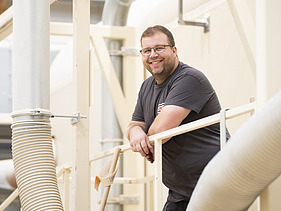
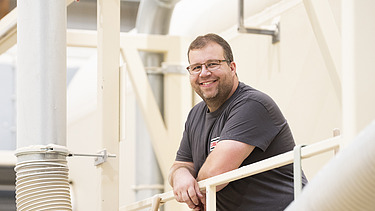
Many people cannot even imagine what is possible these days – both when it comes to building with timber and to working with timber.

Florian
© Sandra Sitzmann/ZÜBLIN Timber
Back to People at ZÜBLIN Timber

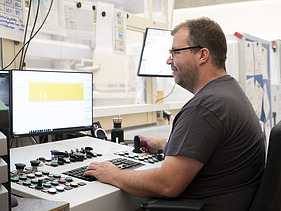
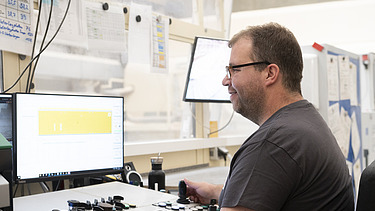
Work on the sheet processing line. Florian gives us an insight.

Florian has been with the company since 2005 and has progressed step by step. He is now responsible for operating our sheet-processing machine. It’s a job that combines manual dexterity with a passion for computer programmes. So Florian never gets bored. 

  • Despite all the preparation, no working day can be planned down to the last detail. Spontaneous changes or variations in materials call for technical expertise and a steady hand – that’s what makes the job so exciting.

    Florian

How did you first hear about ZÜBLIN Timber?

I’m from the local area, so I’ve known ZÜBLIN Timber for a long time. What’s more, a few people I know work here. It was clear to me from an early age that I wanted to learn a trade involving wood. That’s why I started my carpentry apprenticeship here in 2005. After completing my apprenticeship, I was able to develop my skills step by step. As I’ve always been interested in large machines and working with computer programmes, I eventually moved over to the panel processing line.
Why did you decide to take a job in timber construction / as a plant operator?

I love working with wood. It’s a natural material that offers an incredible range of possibilities. At the same time, I’m fascinated by the technology behind modern production facilities. Many people can’t even imagine what’s possible these days – both in terms of building with wood and working with it.

How do you become a plant operator?

There is no specific training programme for plant operators. Above all, it is important to have an interest in technology and in the processes involved in a modern production plant. You should also be comfortable working with computers. You’ll learn the practical skills directly on the machine, with support from experienced colleagues who will share their knowledge and guide you through the process step by step.

What are your typical tasks?

My duties include loading the cross-laminated timber (CLT) panel blanks into the machine and monitoring the entire machining process. I operate the machinery, check the quality of the machining and ensure that everything runs smoothly. I work closely with my colleagues to ensure that production runs efficiently and accurately. That means it’s never boring.

What makes the Hundegger panel processing system (PBA) so special?

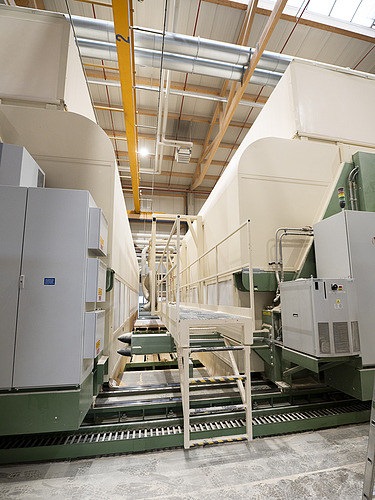
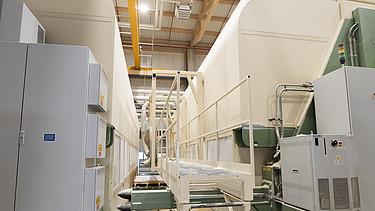
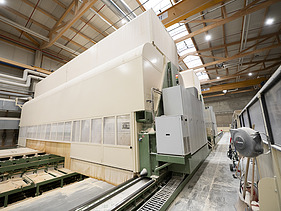
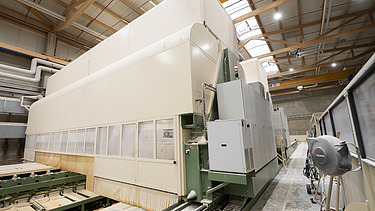
The Hundegger PBA was the first system of its kind and remains one of the largest panel processing systems in the world to this day. What is particularly impressive are the dimensions of the components we process here. Even after many years, I am still constantly amazed at the sizes these panels can reach.

What qualities should you have for this job?

Good manual skills and a keen eye for detail are essential. At the same time, you should be able to work independently and be willing to take on responsibility. Anyone who enjoys hands-on work and is keen on technology is already well placed for this role.

What’s your favourite project?

I find projects in timber engineering particularly exciting – in other words, anything that’s a bit more specialised and technically challenging. Highlights for me included the columns for Stuttgart 21 Central Station and the structural elements for the Gare Maritime in Brussels. At the moment, I’m really interested in working with BauBuche. We’re currently carrying out our first tests with it. The material is significantly harder than many other wood-based materials and therefore presents us with new challenges.

You work shifts. How does that work exactly, and what are the benefits of this arrangement for you?

I work on a weekly rotation of early, late and night shifts. The working hours are clearly defined and the shift rota is finalised well in advance. This means I can plan my free time effectively. Depending on which shift I’m currently working, there are different opportunities to attend personal appointments or get up to something. What’s more, the teamwork is excellent: anything I can’t finish during my shift is seamlessly taken over by my colleagues.